Learning a New Visual Language
When Your Art Style Stops Working
I haven’t written here on the blog for months. Not because I had nothing to say, but simply because my focus and energy have been channelled into other areas.
Many things have changed since my last post. And although my life continues very much as it was before — I am still a full-time mother, navigating moments of loneliness and trying to romanticise them through the little time I have left to create art — something inside me has shifted.
I feel that a great deal has changed within me. Something has grown quietly, and that growth has slowly transformed my art.
Over the past year, my relationship with art has been changing, little by little.
The Season That Changed Everything
The birth of my son was something deeply desired and long awaited. I felt — and knew — that I was ready to become a mother again. Ten years had passed since my first son was born, and I wanted to savour this experience in a different way.
But when the sun is shining, it is difficult to imagine that a storm might be approaching. And when it finally arrives, we often do not know how to respond. We stand there quietly, watching it pass through our lives, stealing pieces of our happiness before we have even realised what is happening.
After the birth of my youngest son, I went through a period that was much more difficult than I had expected. Later, I came to understand that what I was experiencing was postpartum depression.
This emotionally challenging season coincided with a growing sense of artistic disconnection that had already been quietly building within me for some time. For a long while, I had been feeling dissatisfied with my artistic direction, and postpartum depression only intensified those insecurities.
When Your Old Language Stops Working
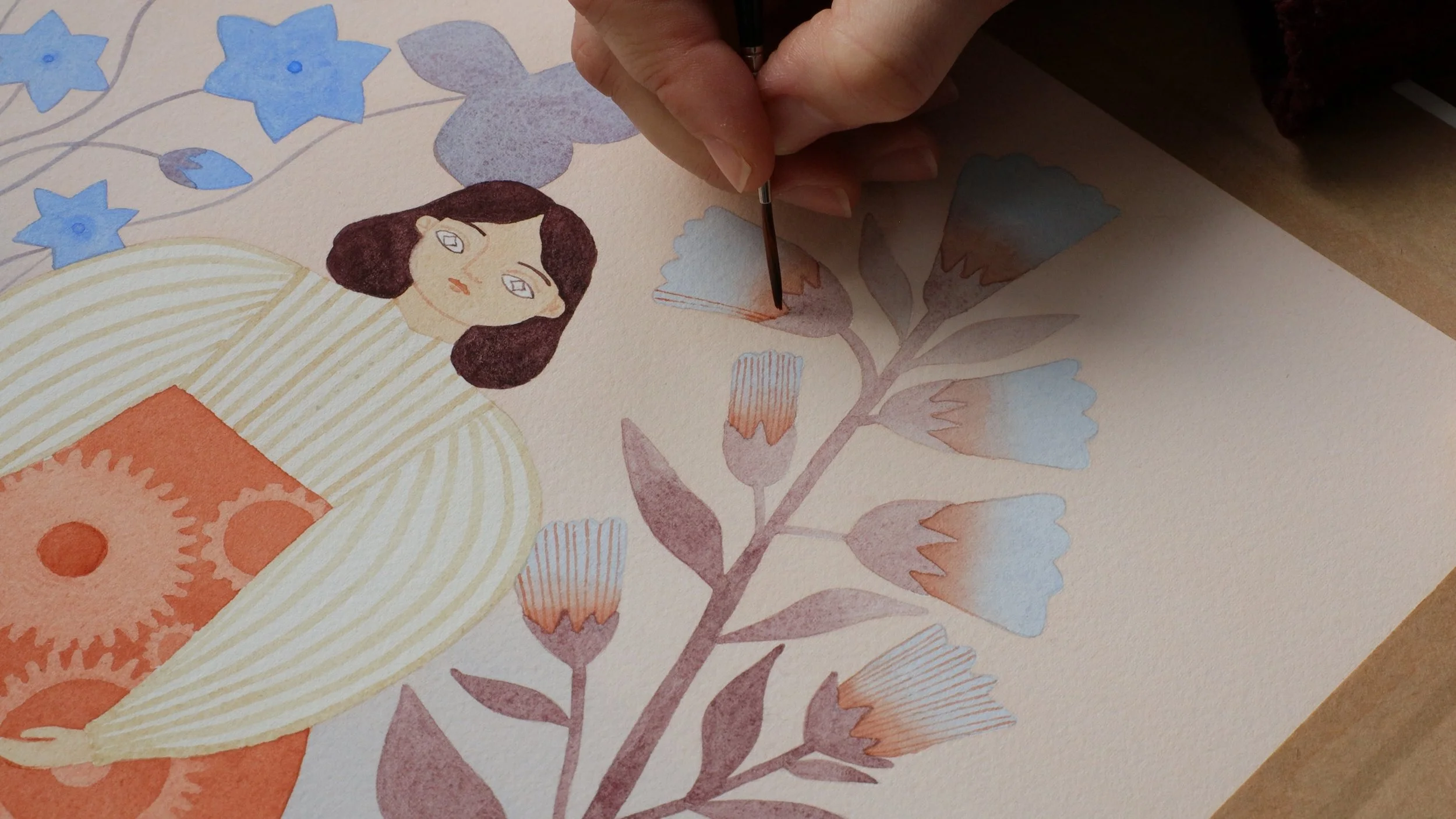
There came a moment when my old style simply stopped working.
The kind of illustration I had been creating no longer reflected what I was feeling. It no longer felt like a place I could live in.
Depression introduces us to a shadowed side of ourselves. And I felt a very strong need to express that shadow — almost as a form of release.
Unlike my first child, this time I did not have the fortune of having a baby who slept easily. I spent many hours each day helping him fall asleep. These moments were often filled with pause, reflection, and a deep sense of love. But they could also stretch long enough for boredom to settle in.
And it was precisely in those quiet moments that my creativity began to awaken.
My mind would begin drawing what I was feeling in the form of images — almost like visual poetry.
That was when I realised something important: I had not stopped creating because I lacked time.
Even when my hands were occupied, I was still painting in my mind.
Those mental images were unlike anything I had created before. They did not come from references or external inspiration. They were born directly from emotion, forged in the moment that gave them life.
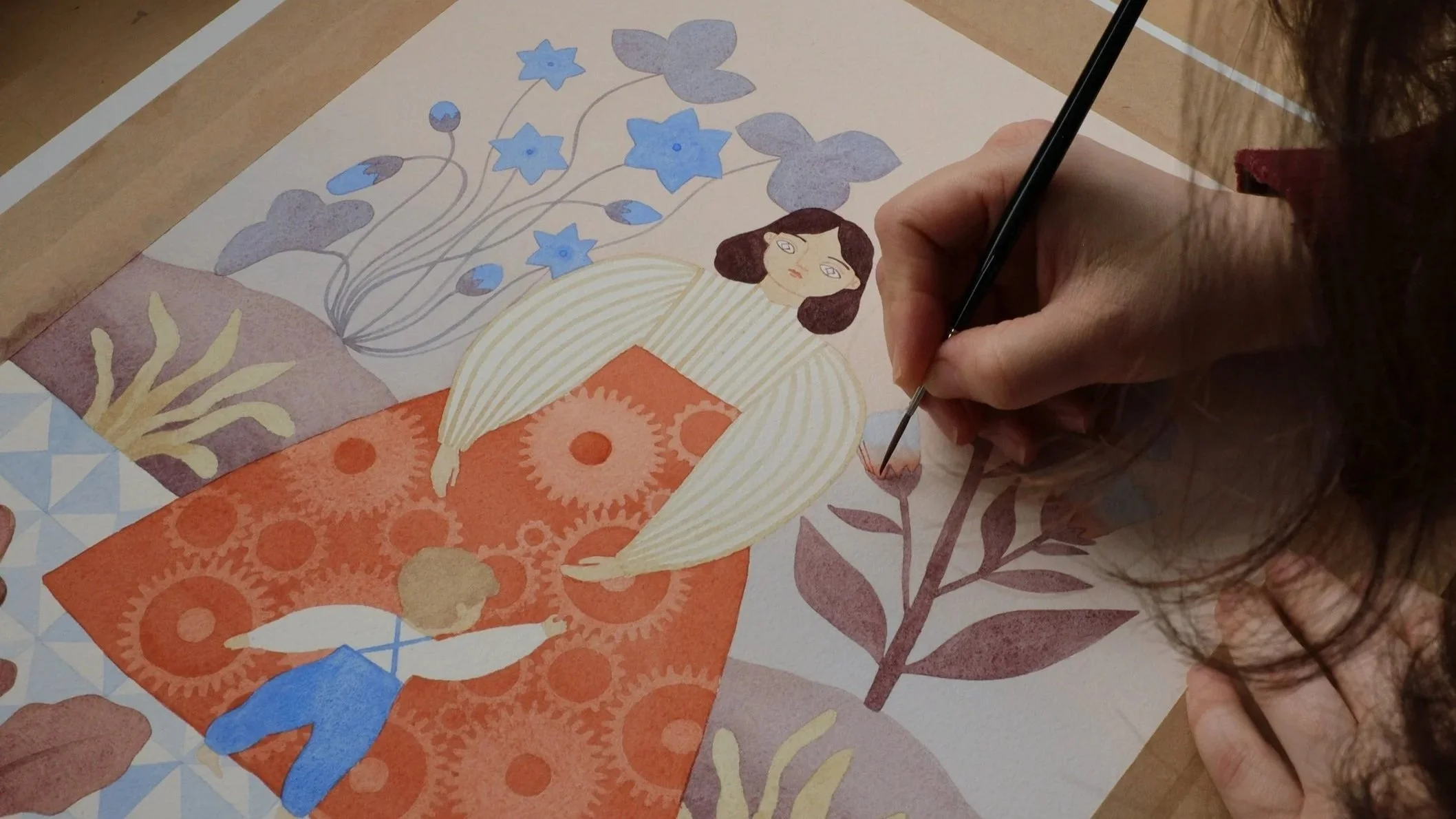
Slowly, I began to notice that these inner images belonged to a different visual language from the one I had been using.
The way I used to draw no longer felt like a place I could inhabit.
It was as if my old visual language could no longer carry what I was feeling.
Learning a New Visual Language
Learning a new visual language is very much like learning a new spoken language.
First, we need to acquire new vocabulary. Then we must learn how to combine it patiently, accepting with humility that we will not be fluent in our first attempts.
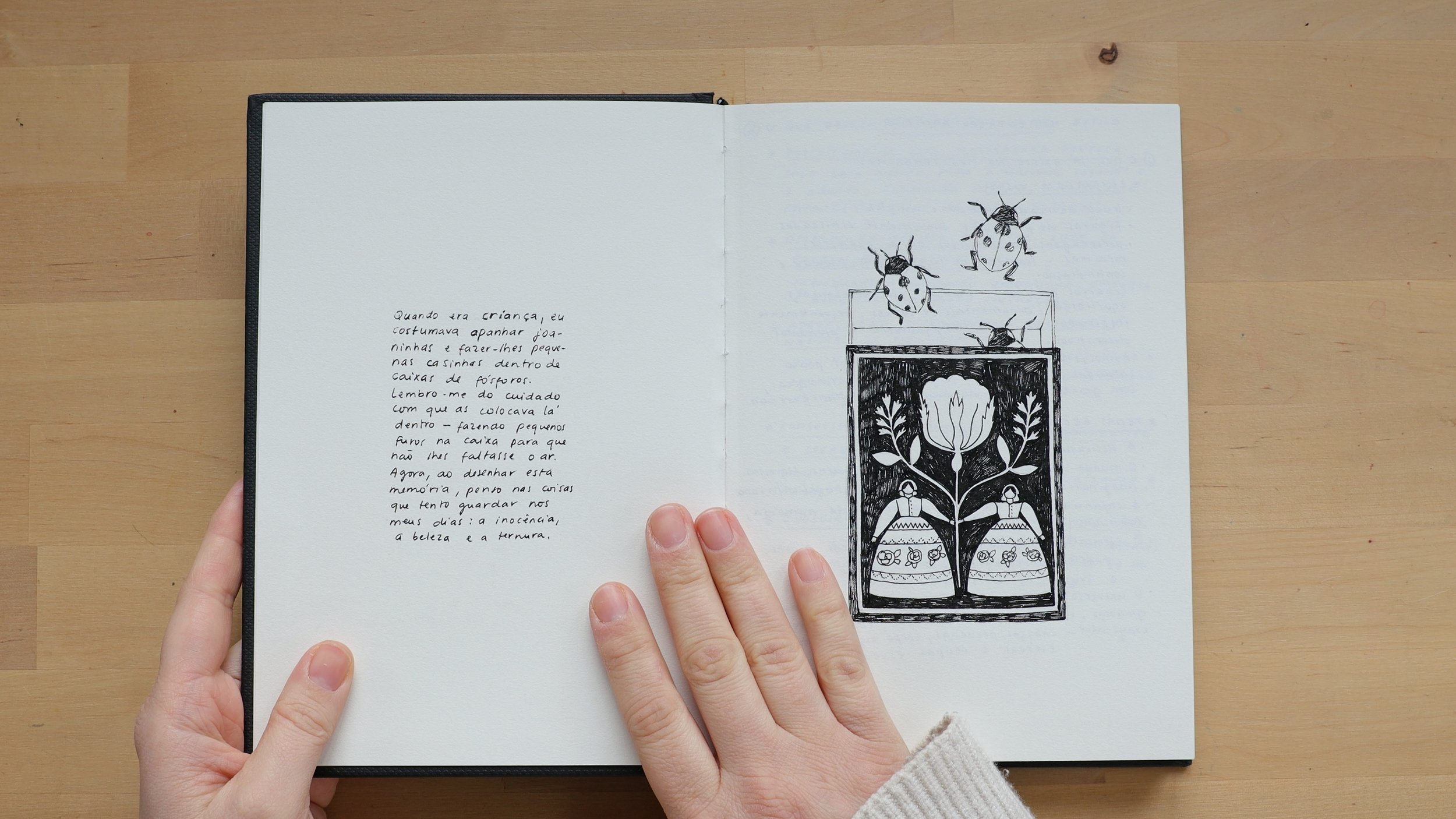
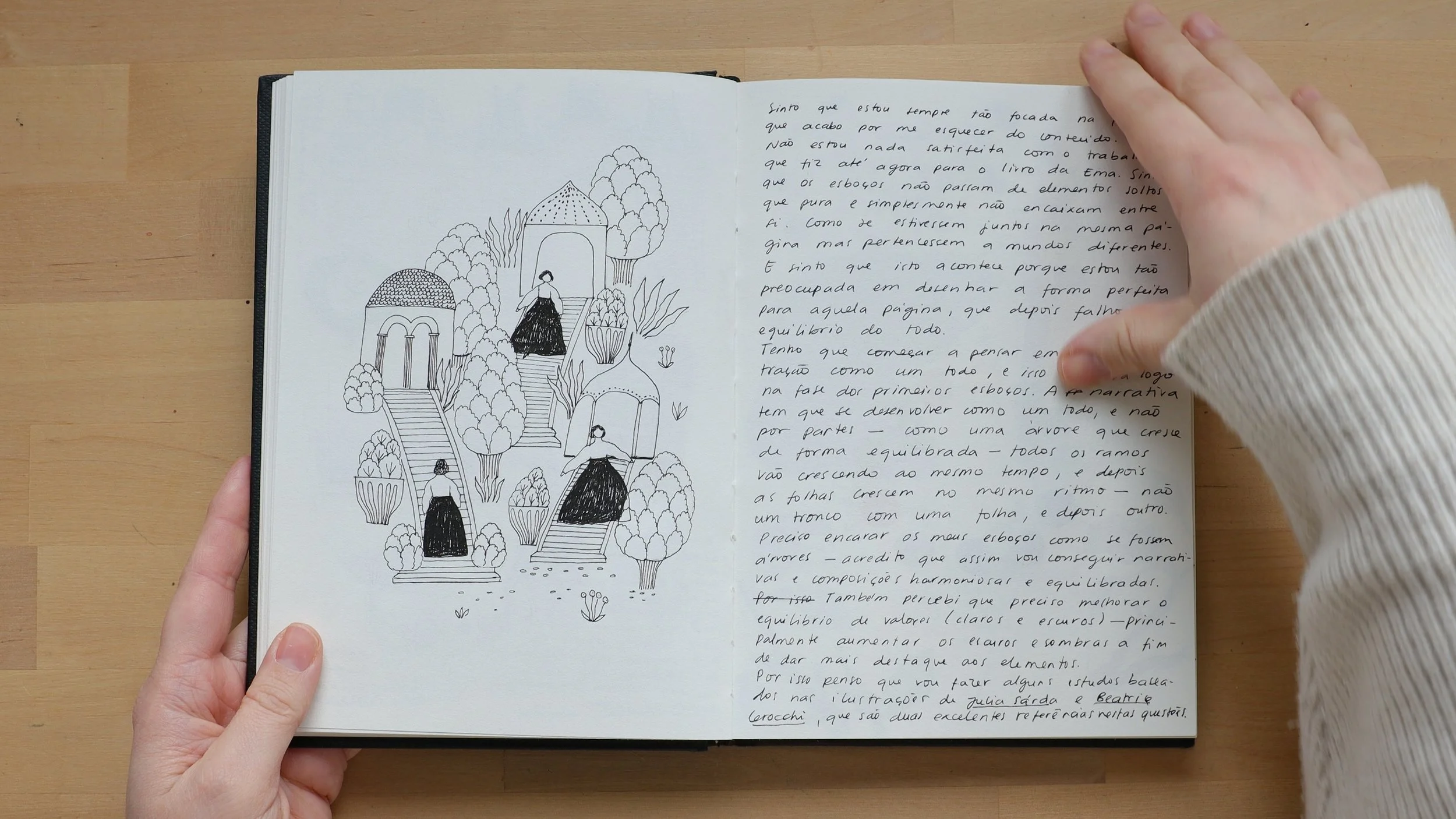
I knew my sketchbook would be essential for this process.
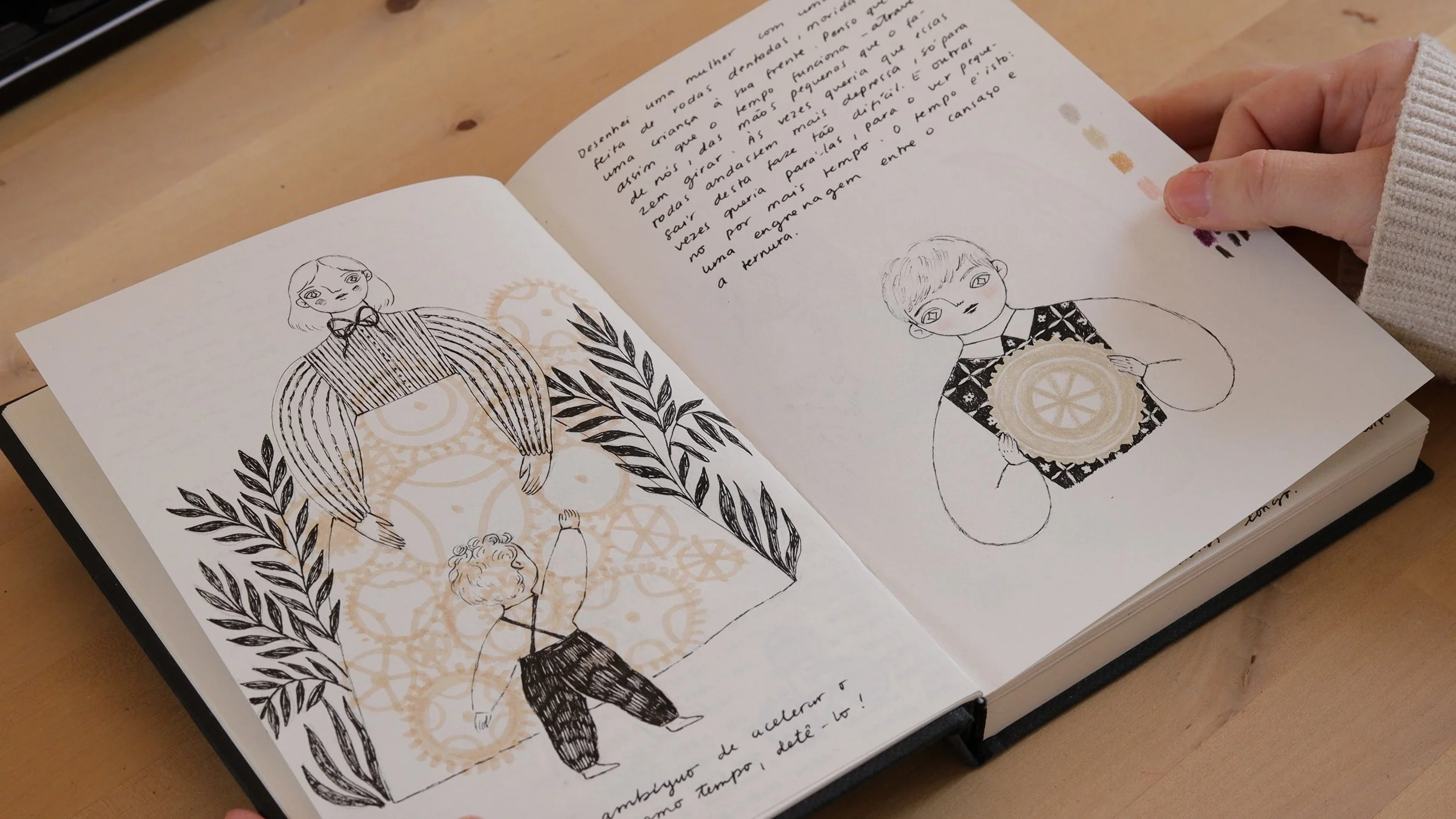
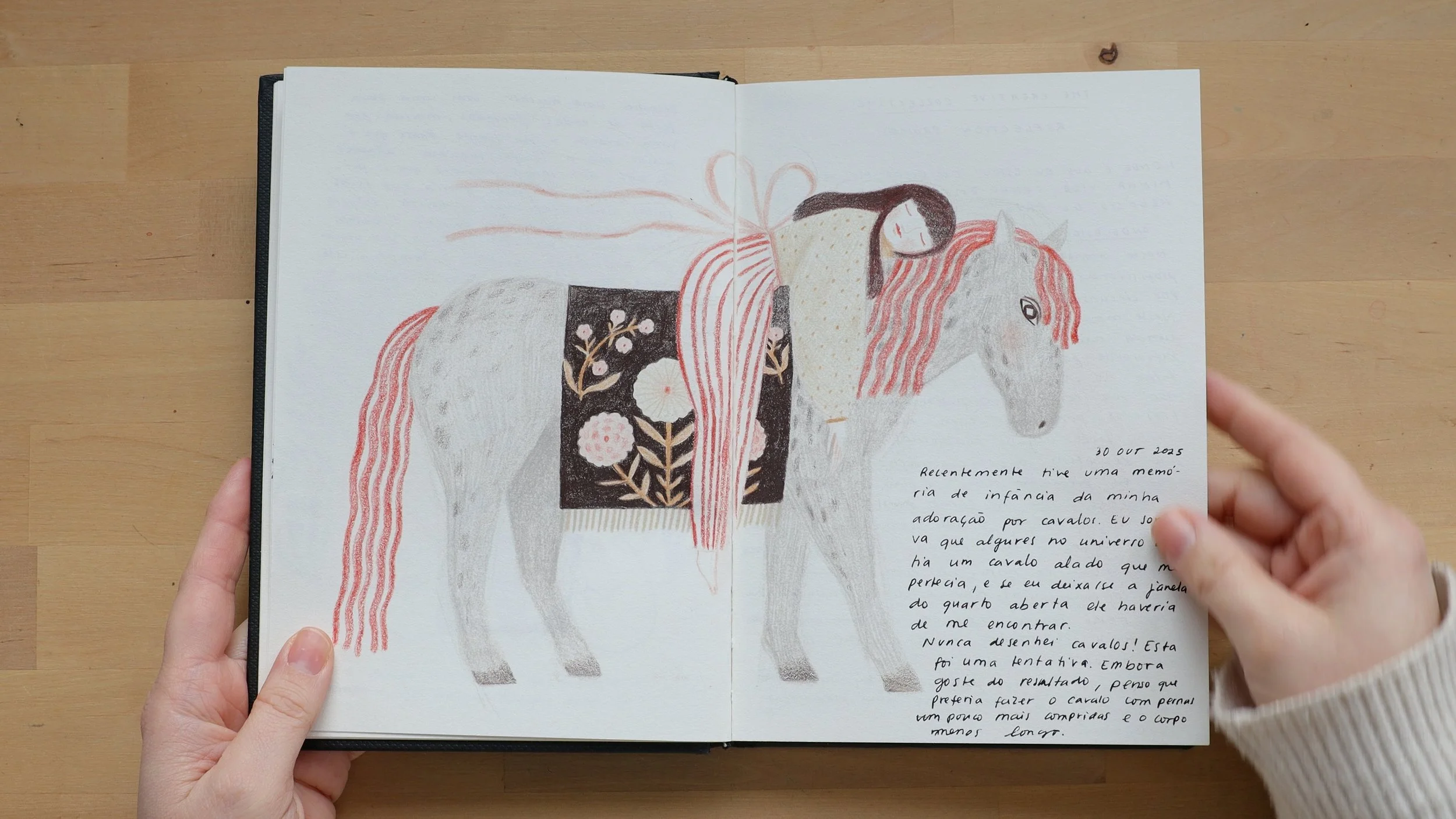
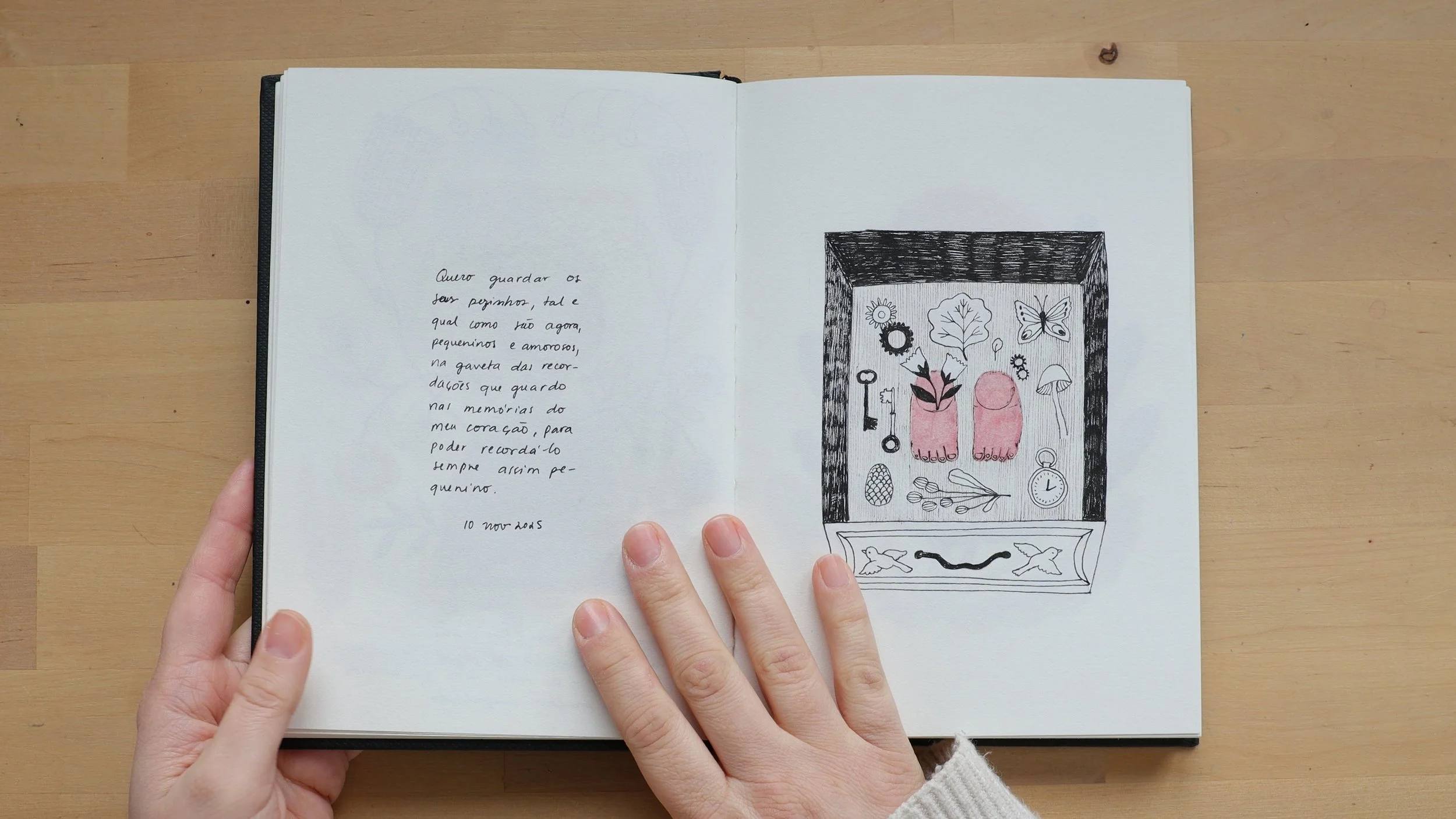
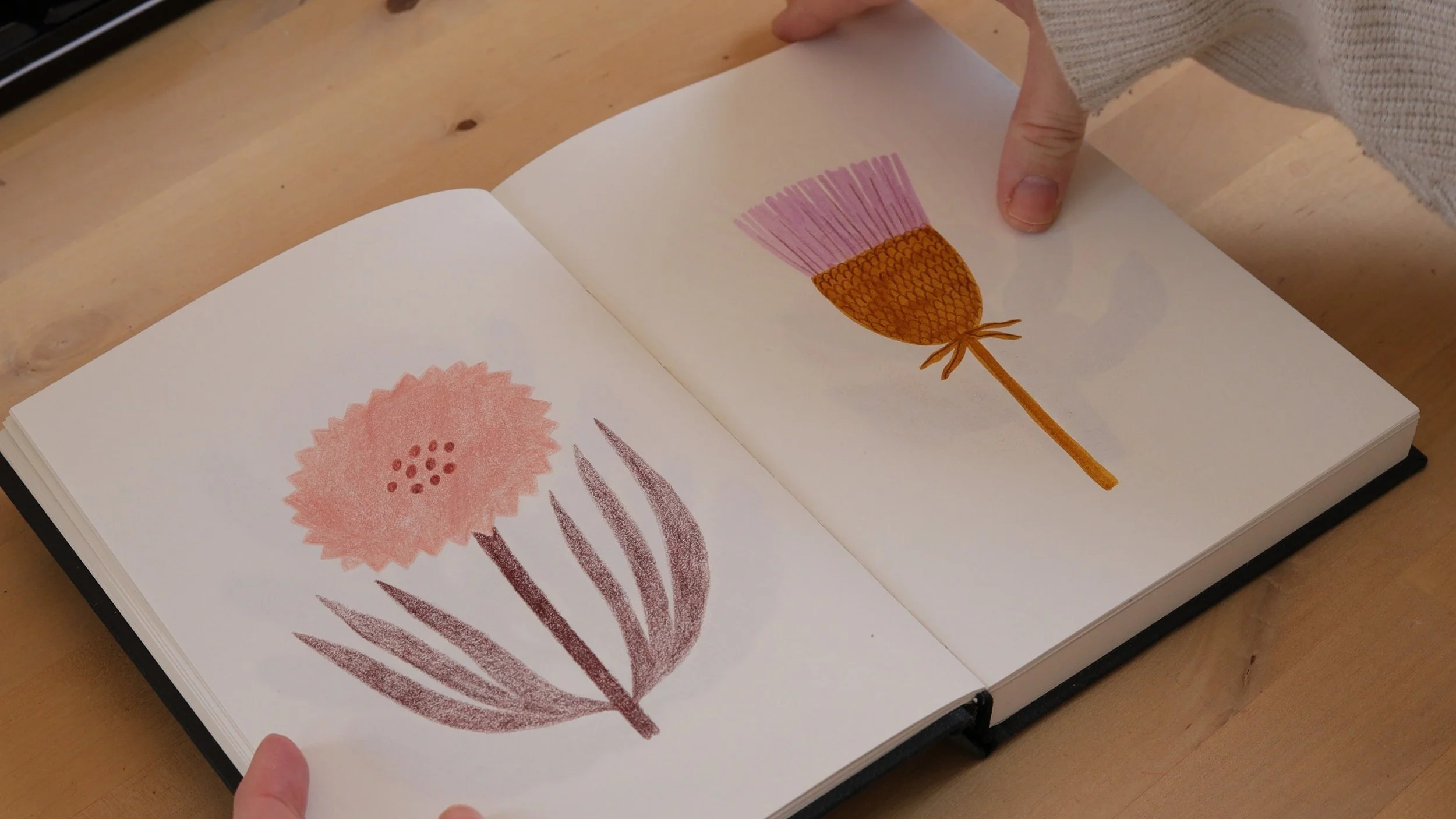
I tried to build an even more regular practice, using my sketchbook to capture quick sketches as soon as ideas appeared in my mind, and to help me search for the visual language that could best express the images living inside me.
I began looking more closely at artists whose work carried strong symbolic narratives. Frida Kahlo, Sanai Sugimoto, and Salvador Dalí became important references as I tried to understand how emotion, symbolism, and personal mythology could coexist within an image.
I also remained deeply inspired by Henri Rousseau and discovered new technical influences, such as Jean Mallard’s technique of layering colours to create depth and atmosphere.
I experimented a great deal. I observed even more.
Little by little, my own language began to emerge. At some point, it started to feel natural — and I began to recognise it as something that truly belonged to me.
I am still in the process of becoming fluent. But I feel deeply proud of everything I have learned, and of how far this journey has already taken me.
The Direction I Am Exploring Now
This was not a strategic change. It was a necessary one.
It came from within — a transformation that helped me understand myself more deeply.
The work I am creating now is born from an emotional landscape shaped by the tension between connection and disconnection — a tension that many women who have experienced postpartum depression may recognise.
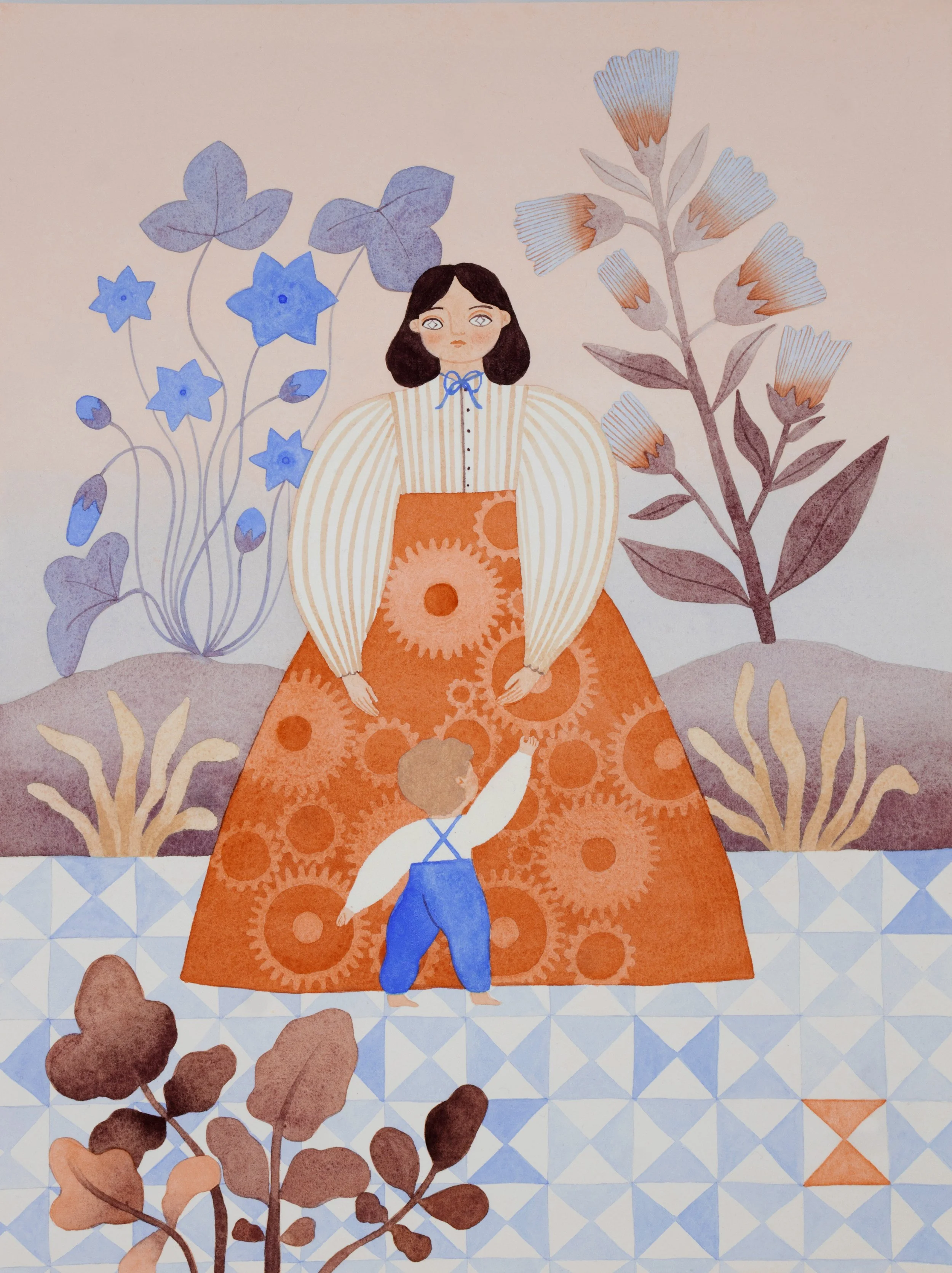
My images are often filled with symbolic elements: solitary figures, quiet landscapes, gardens, interiors, objects that carry emotional weight. The compositions tend to feel contemplative, almost like suspended moments where time slows down.
There is often a sense of stillness, but also a quiet emotional complexity beneath the surface — a mixture of tenderness, solitude, longing, and reflection.
Rather than telling literal stories, I am interested in creating spaces where emotion can be felt and interpreted freely. Images that function almost like visual poems, where symbolism and atmosphere invite the viewer into a more introspective experience.
In many ways, this new direction also reflects a deeper shift in my intentions as an artist.
I no longer feel interested in creating work that is purely decorative, or simply calm and beautiful.
Instead, I want to explore the human dimension more deeply. I want to create emotionally ambiguous experiences — images that invite pause, contemplation, and a quiet form of inner recognition.
My hope is that my work can gently hold space for emotion.
That it can create moments of stillness in which memory, symbolism, and poetic imagery invite a more honest connection with ourselves.
If I were to describe my current intention as an artist, it would be something like this:
Through my art, I hope to create spaces of calm and transcendence, where memory and poetic symbolism invite emotional honesty, connection, and an exploration of the feminine experience as a sensitive and deeply human force.
I still do not know exactly where this path will lead.
In many ways, I feel like I am still learning this new language — still discovering its nuances, its rhythms, its possibilities.
But for the first time in a long while, the work feels honest.
And for now, that feels like the most important place to begin.